
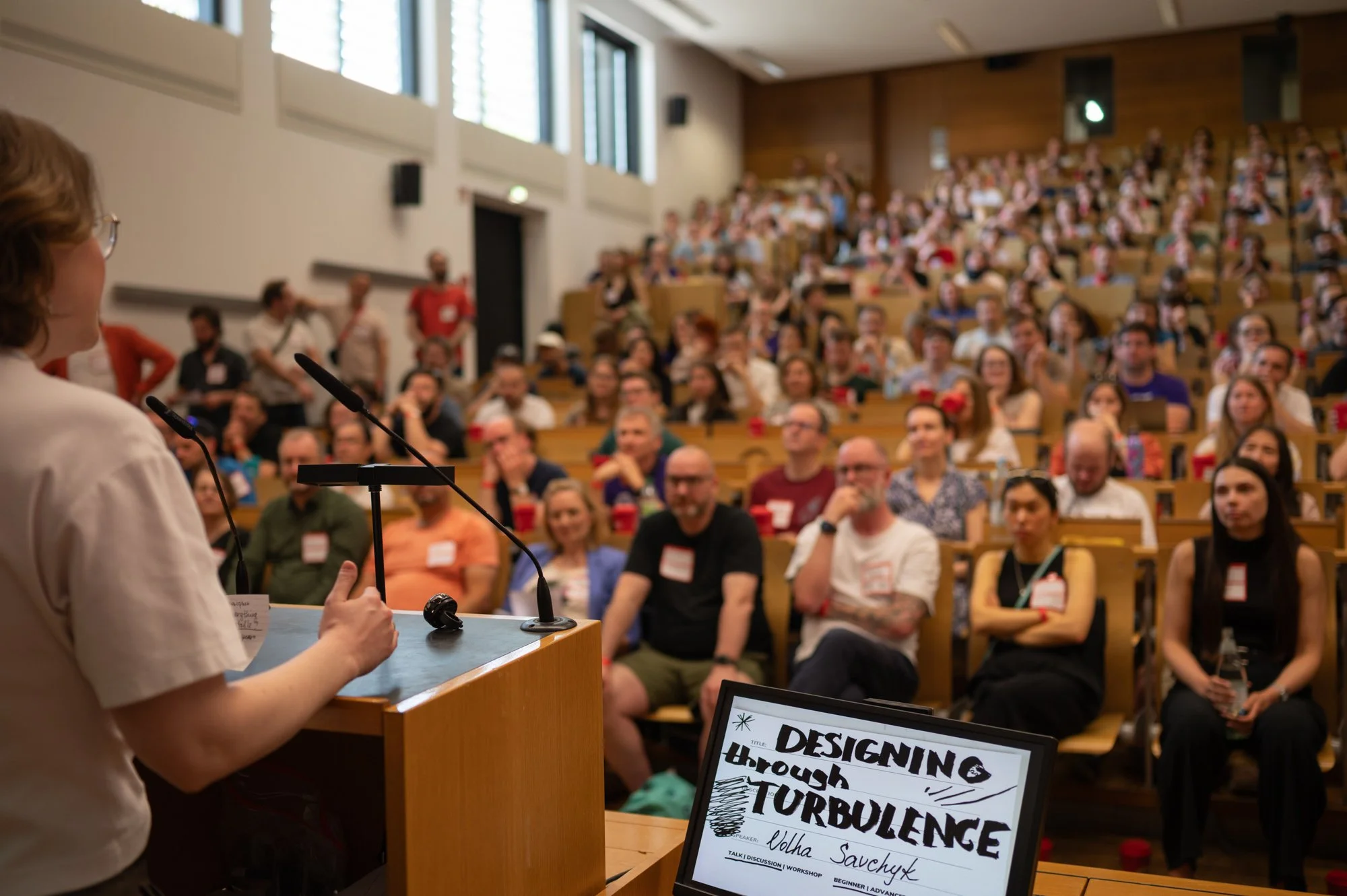
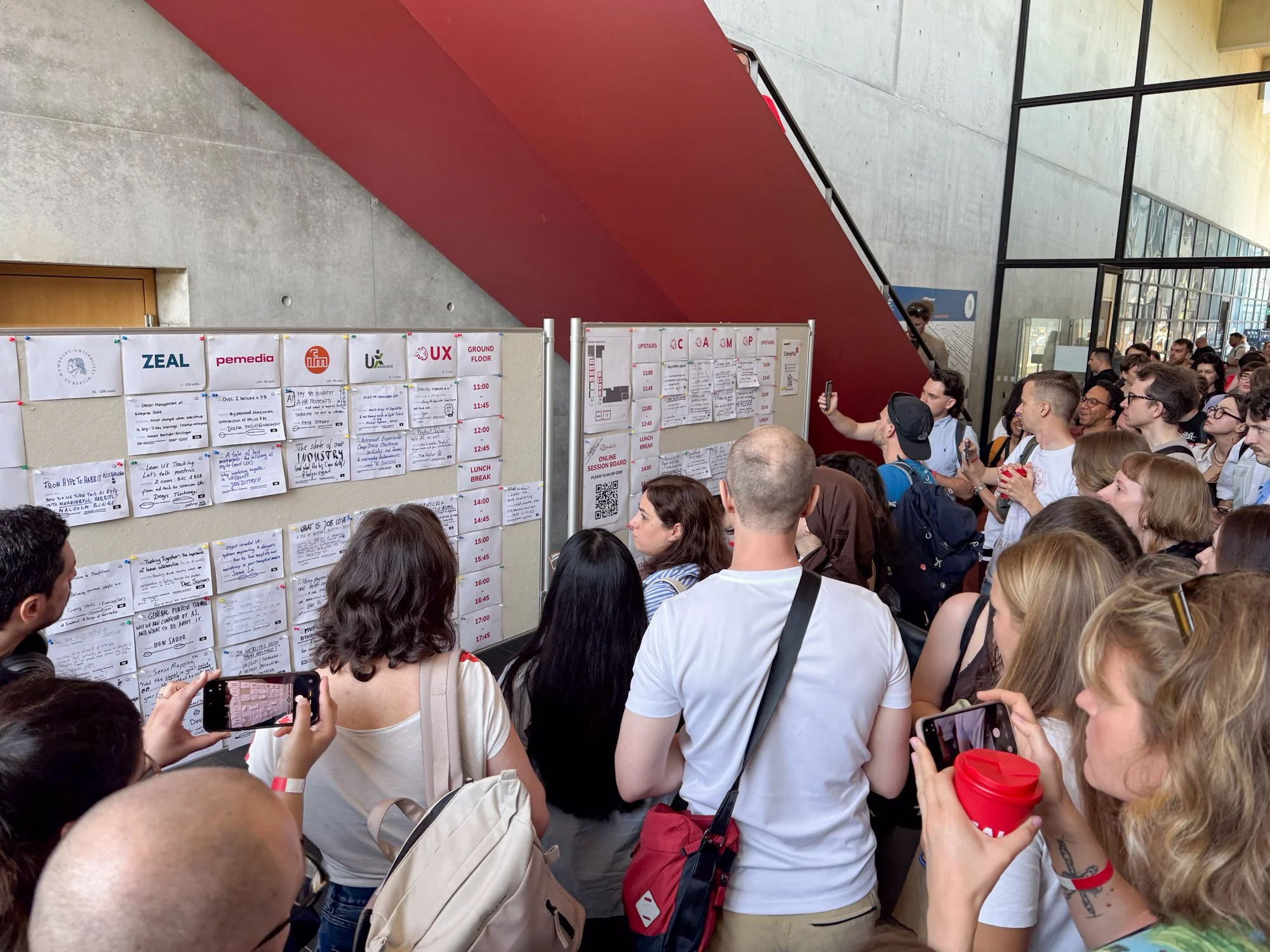
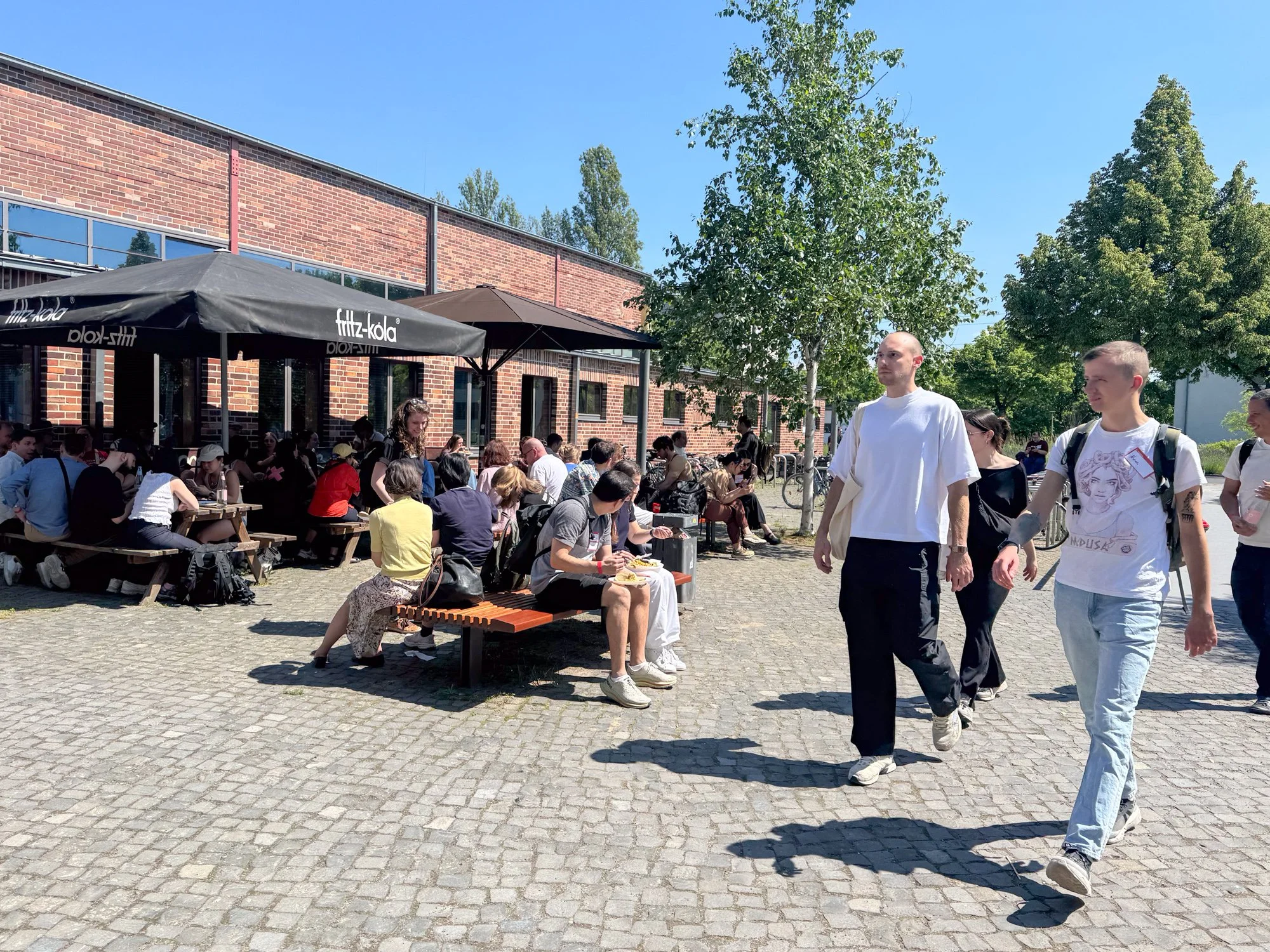
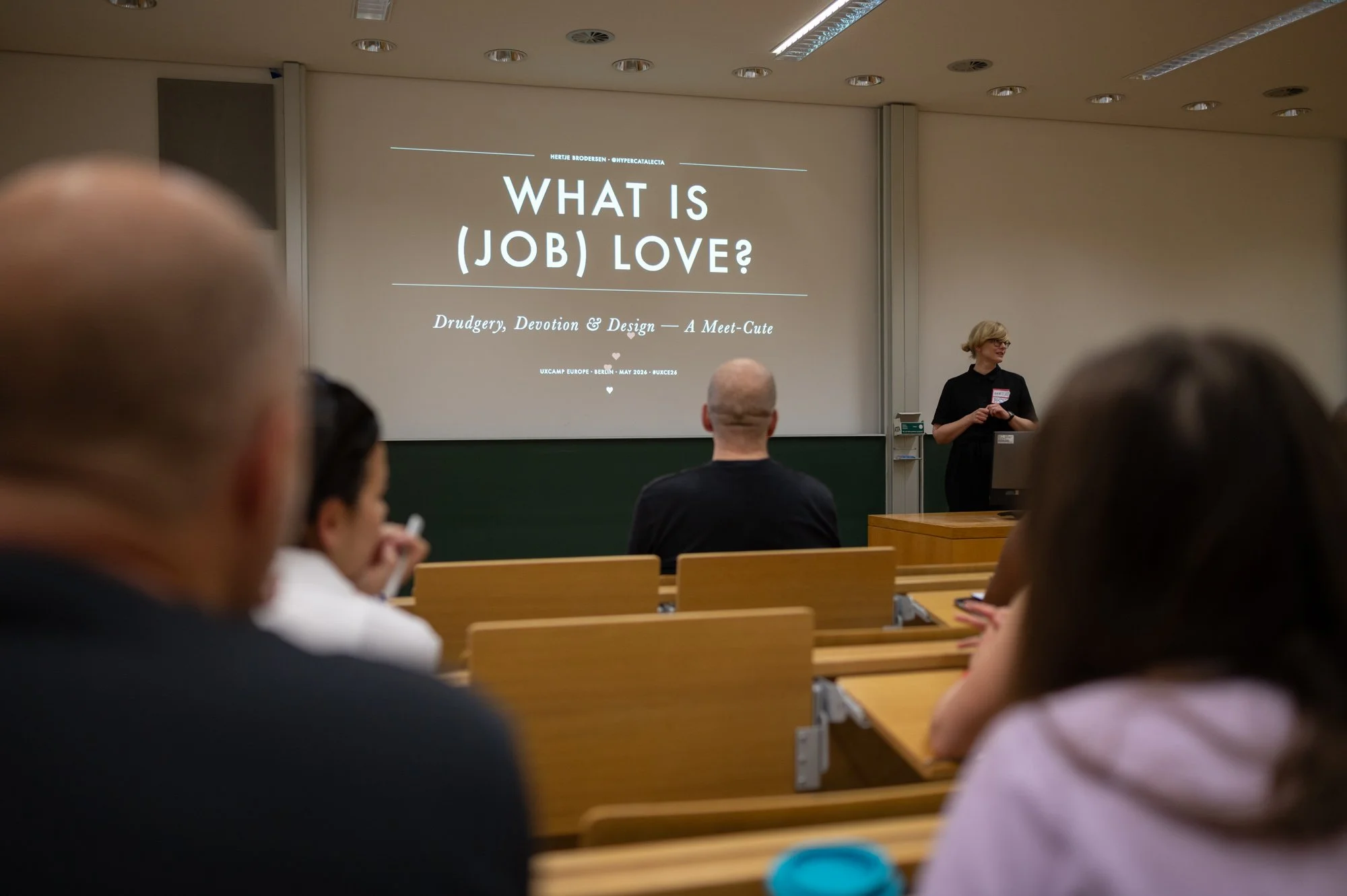
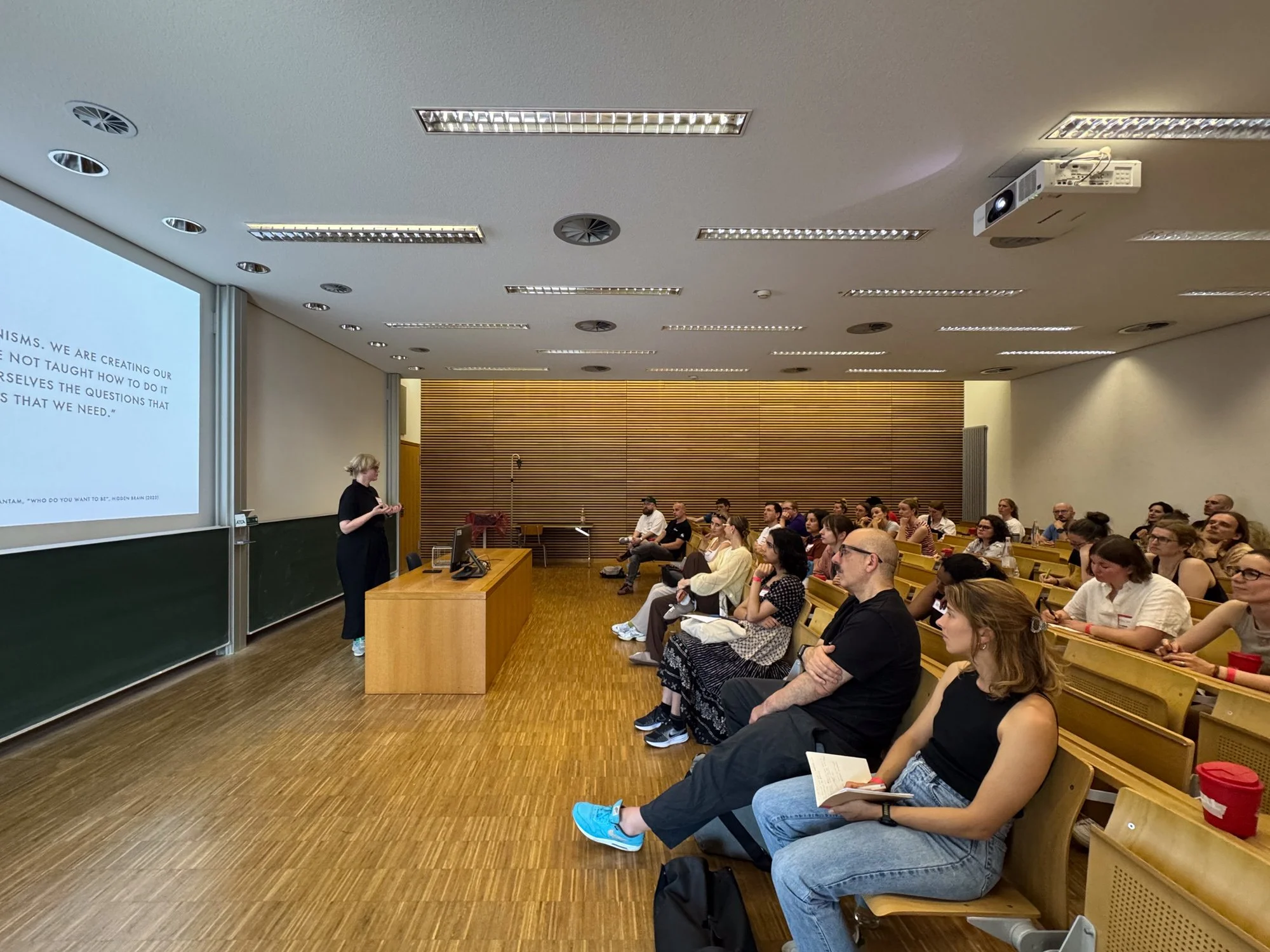
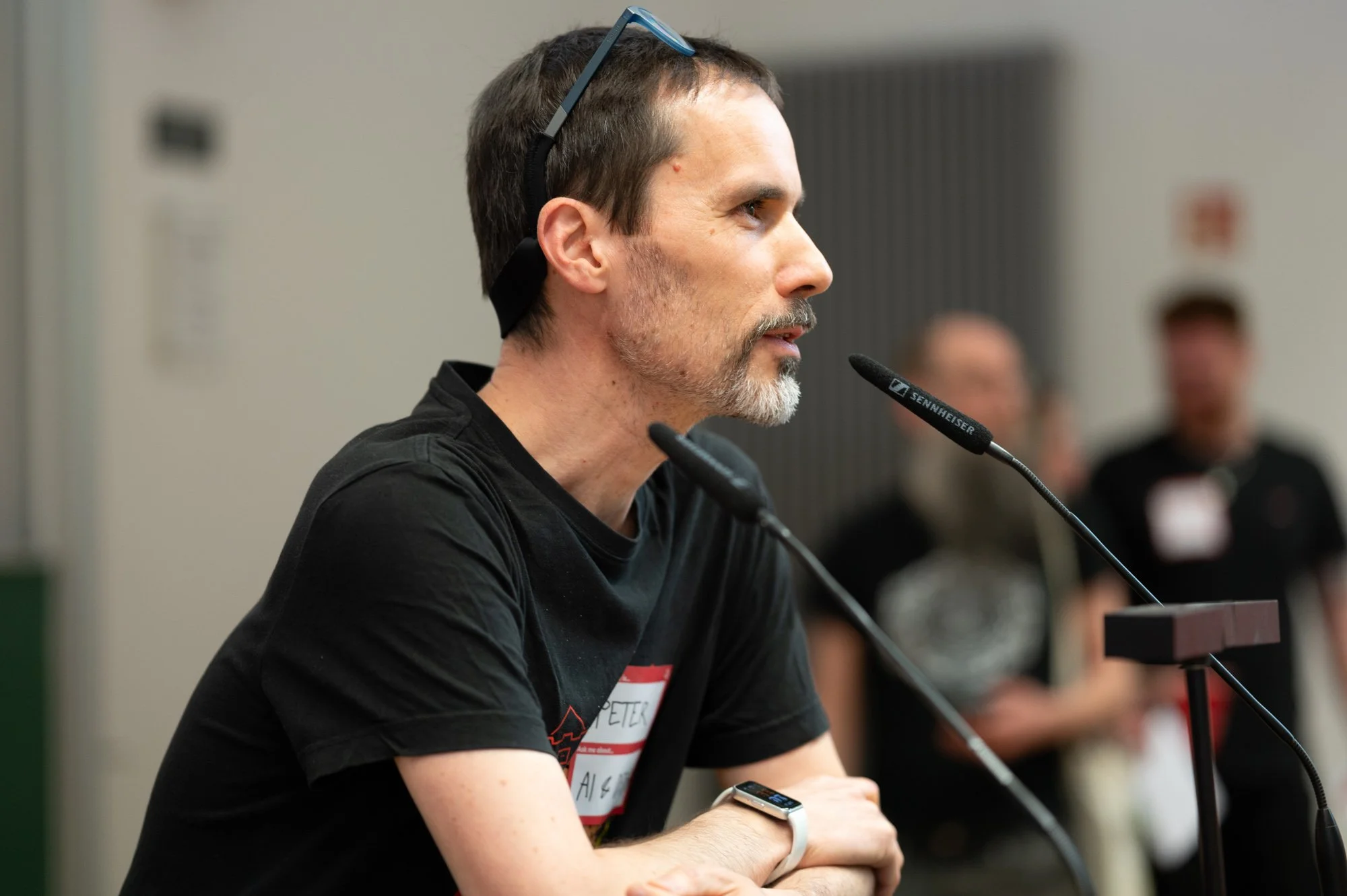
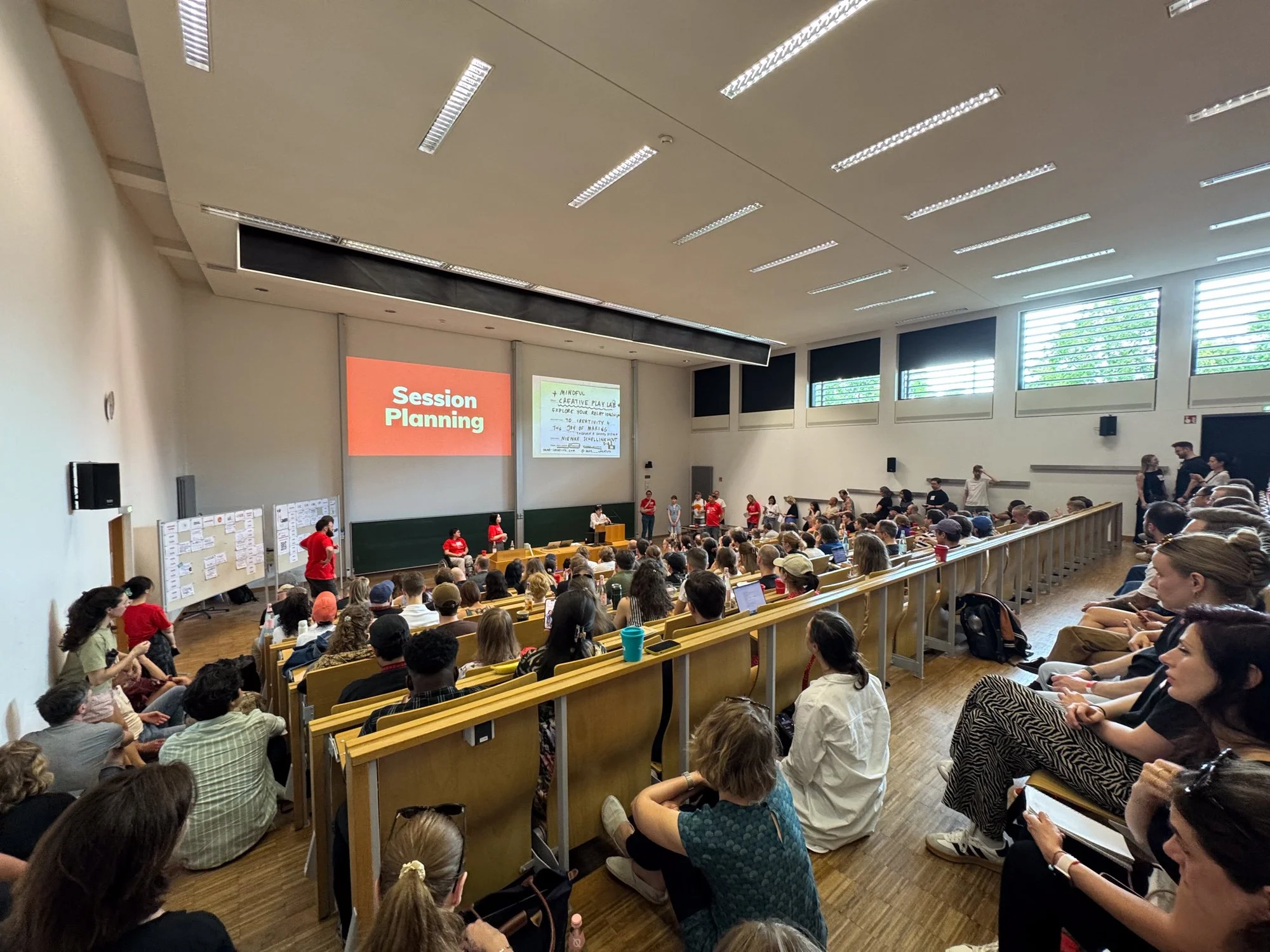
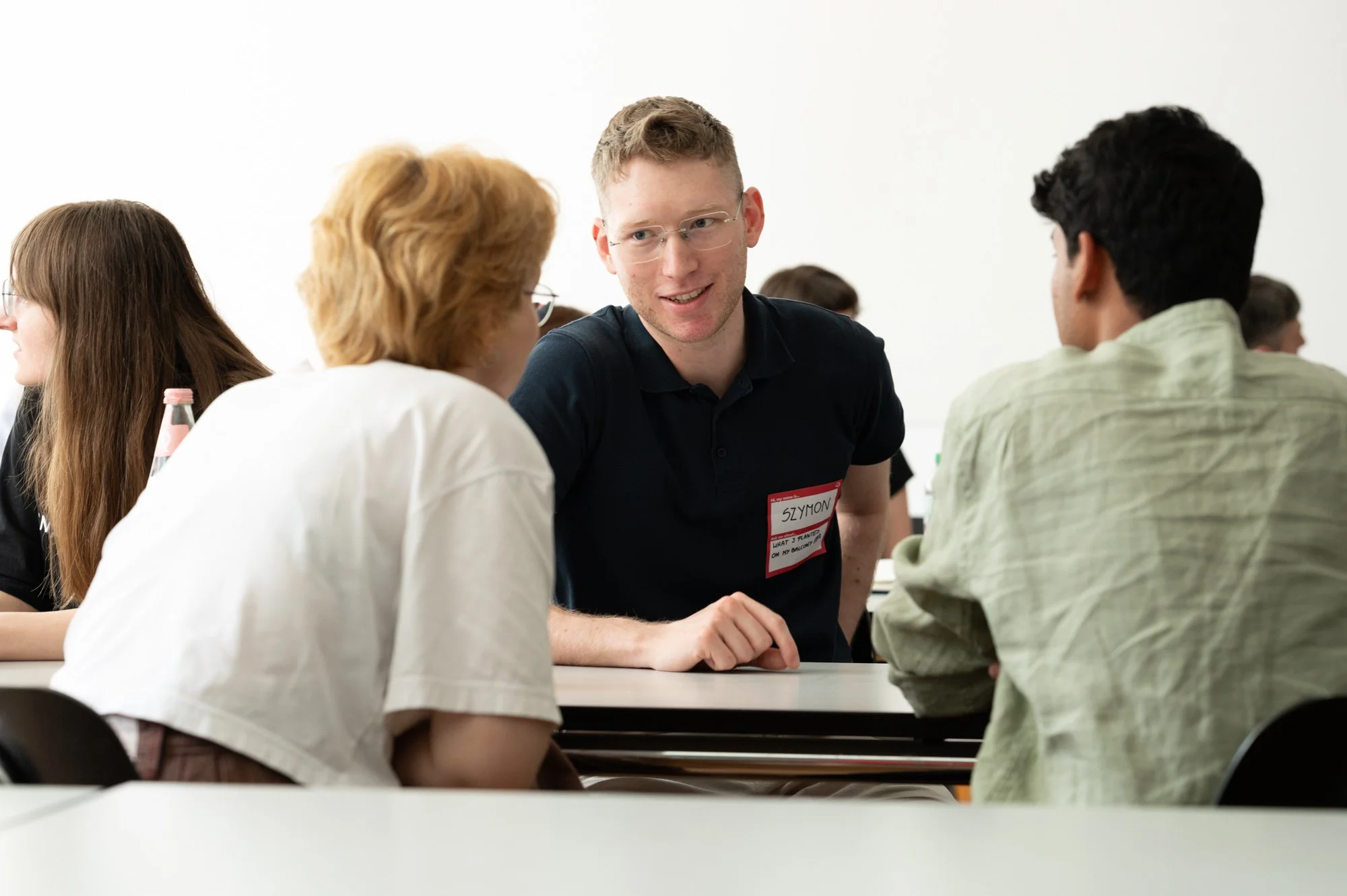
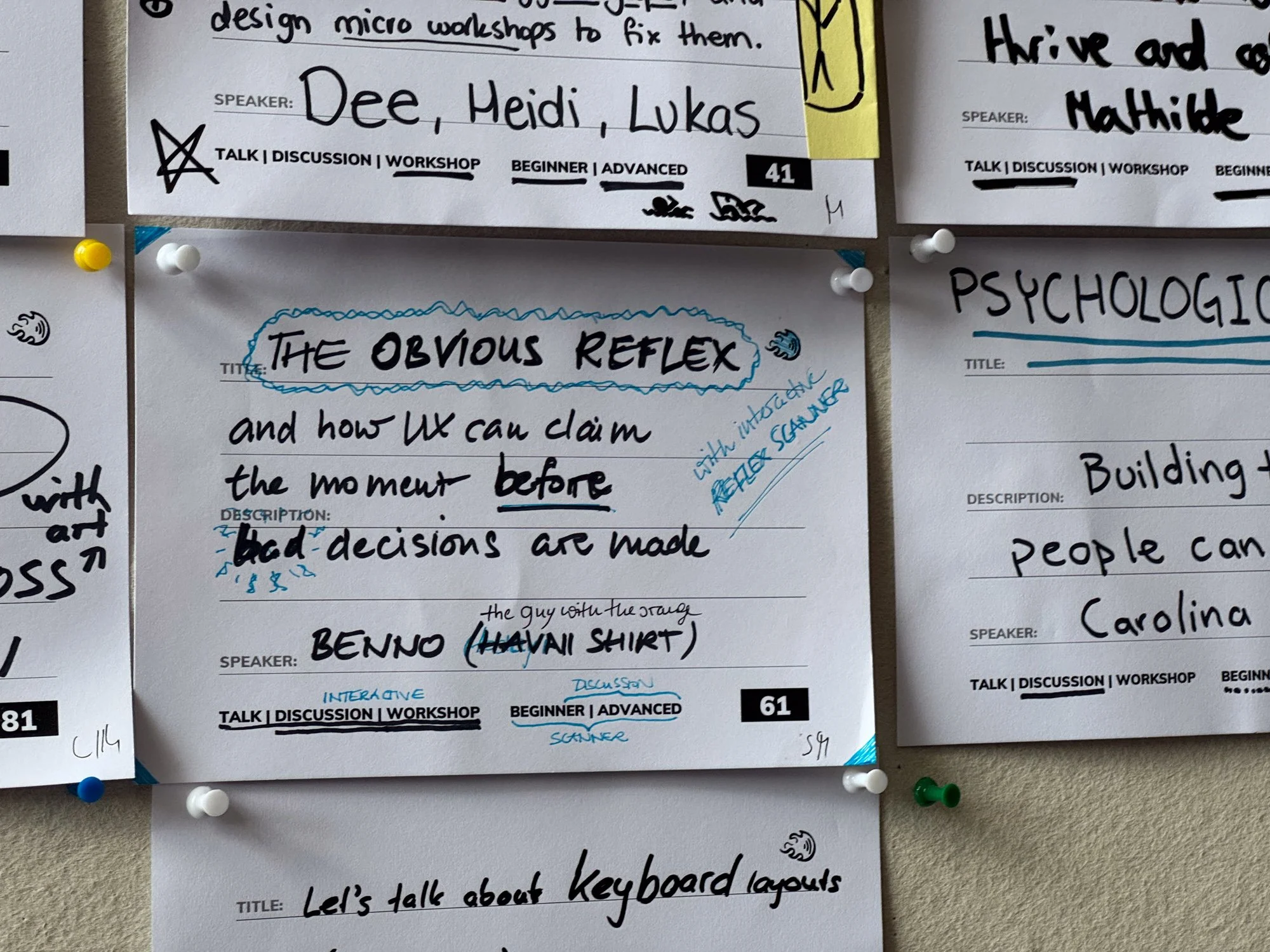
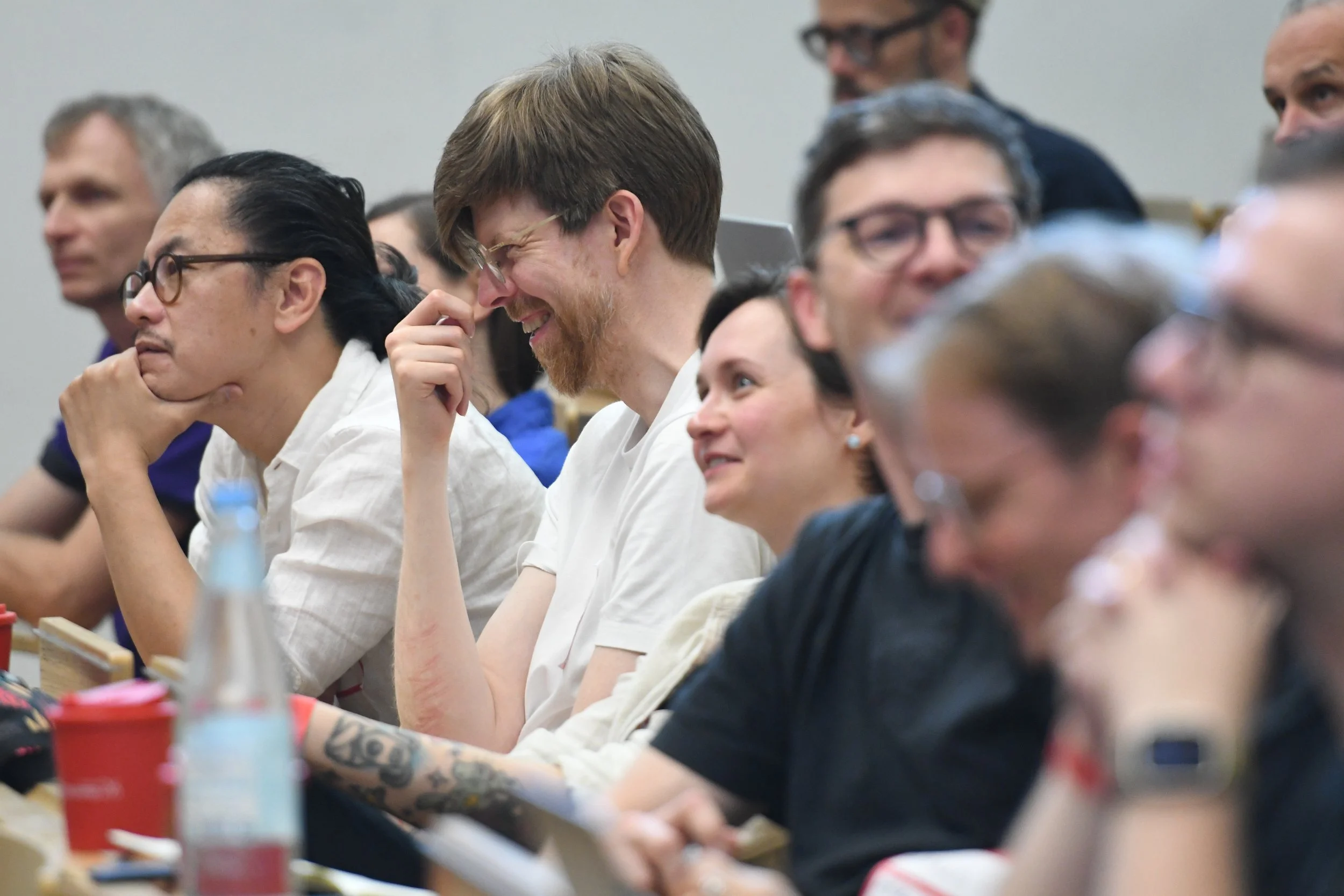
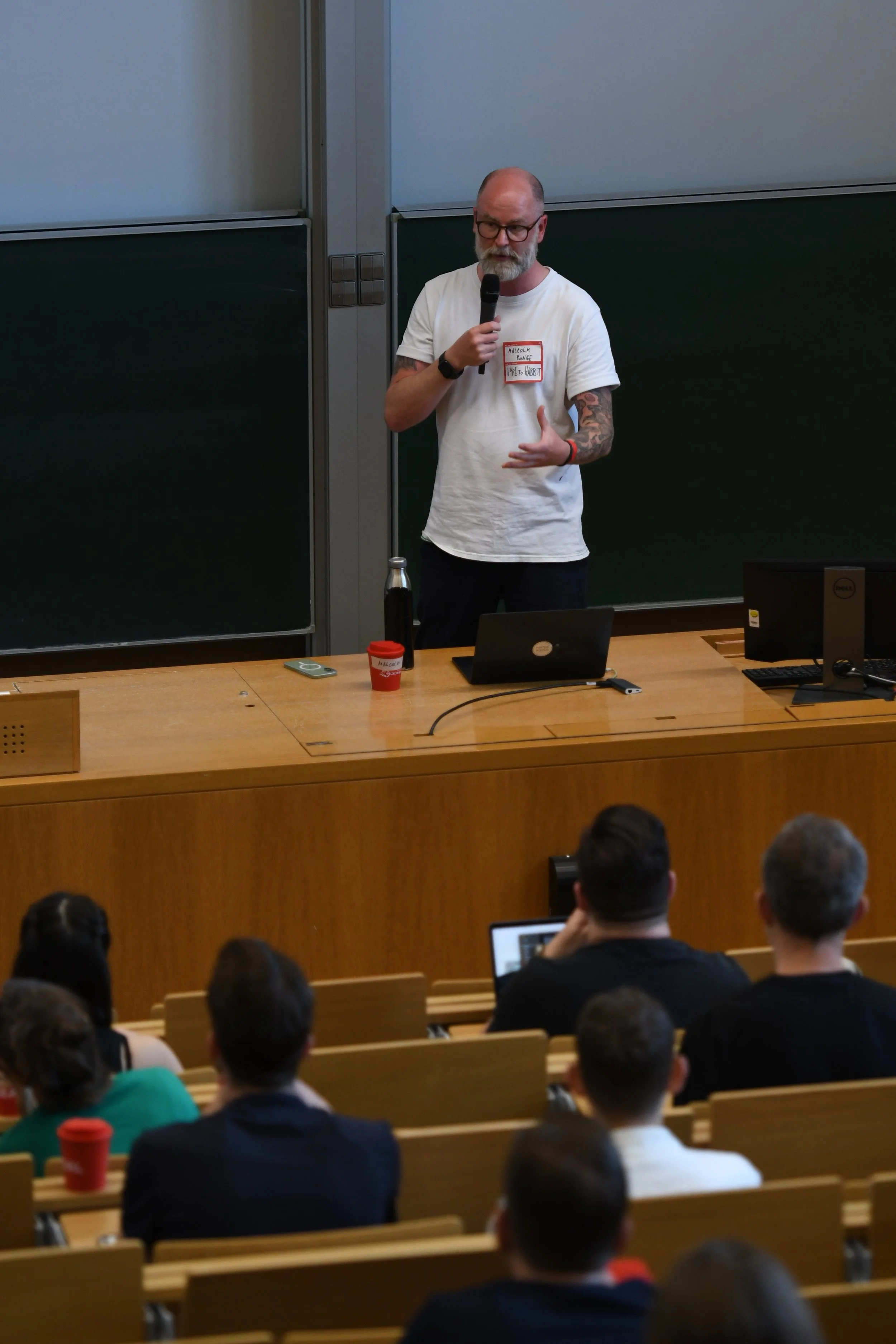
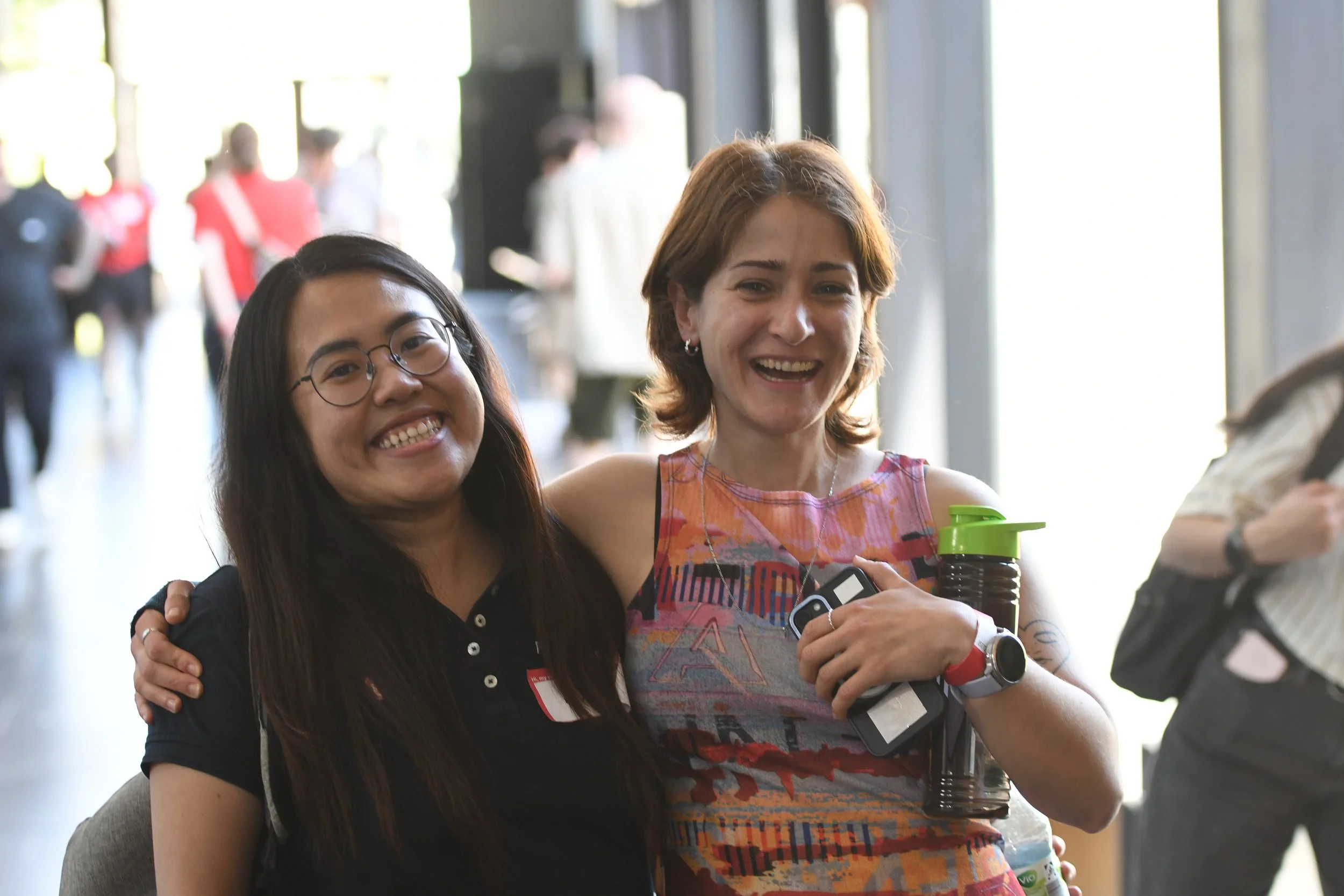
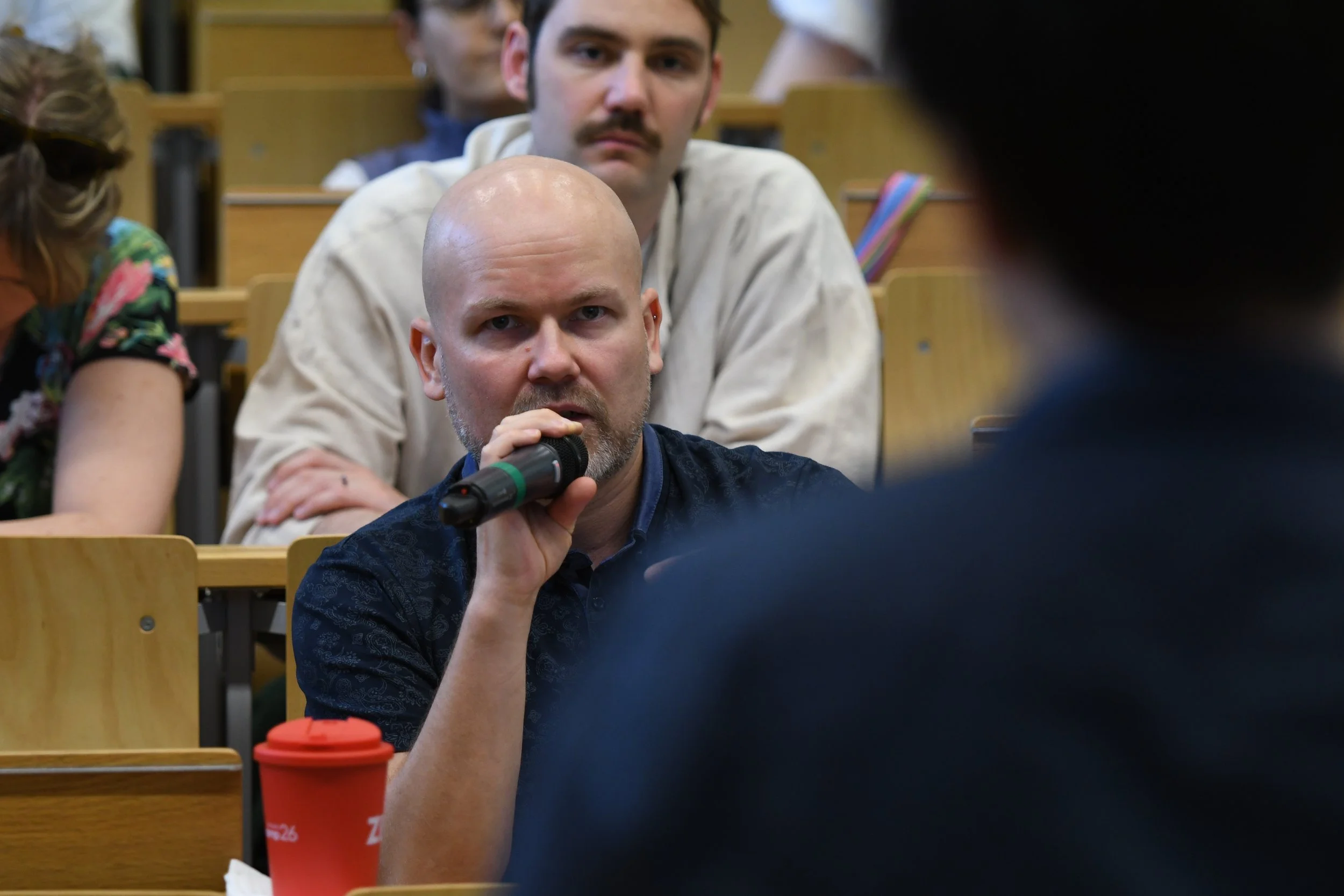
Over 600 UX professionals came to Humboldt-Universität zu Berlin on May 23–24, 2026. As always, there was no fixed program. People arrived with ideas, experiences and questions, then pitched them on stage. 104 sessions were pitched and discussed by the attendees themselves, across many rooms and floors. With so many choices, deciding where to go became a skill of its own.
The mood this year was mixed. Money is tight, the job market feels uncertain, and AI is changing the work fast. Many people came with big questions, and the camp gave them a place to say them out loud.
UXcamp Europe 26 – Review
Key Themes and Highlights
1. AI: The hype will pass, the change will stay
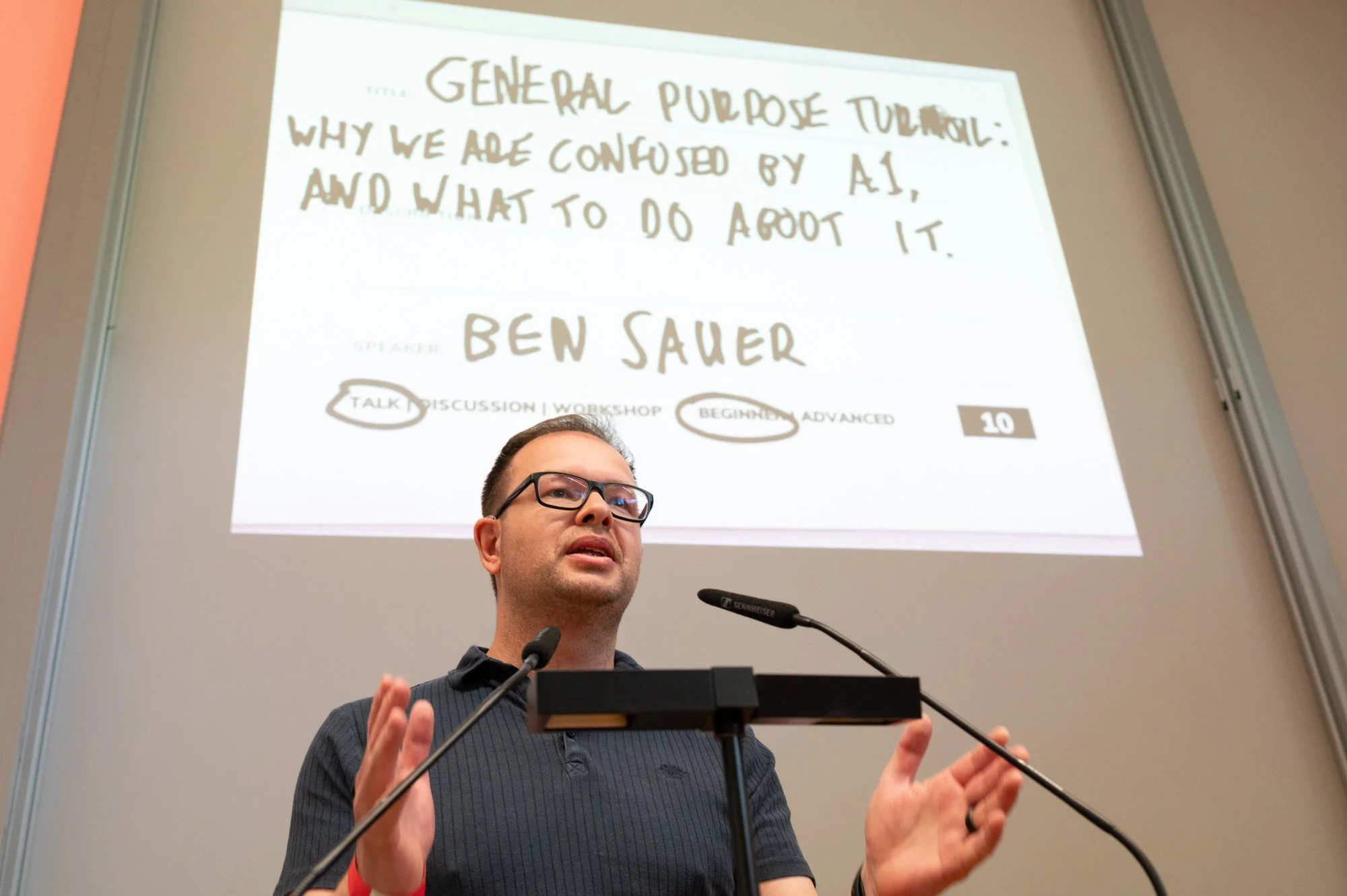
AI was everywhere on the session boards. The talks went beyond “look what this tool can do”. Some asked what actually changes in our daily work. Others looked at how design with AI fails, how companies misuse AI and forget their customers, and how to build personal AI workflows. One session explored four possible futures for AI: constraint, growth, transformation and collapse. Another showed how Figma can be connected to code with AI tools. People also asked some basic questions. Will we still need classic interfaces when agents do the work? Are agents users too? Do they need their own journeys? If users stop seeing the interface, design does not get less important. It just moves to things like trust, transparency and who can step in when something goes wrong.
2. Building is cheap, understanding is not
AI has made it much cheaper to build a first version of a product. Several sessions pointed out that figuring out what is worth building has not become any easier. A live vibe-coding session showed how product people without code skills can test ideas in a day. The question moved from “can we build it?” to “should we build it?”
3. Feeling tired and taking care of ourselves
Many people said they feel worn out by the constant speed of new tools and expectations. Sessions on AI and burnout, and on burnout in design, talked about breaks, boundaries and saying no. One message came up again and again: being tired is not a personal failure. It is often a signal that the way we work is not right. One speaker put it simply: take care of yourself, because your health matters more than any productivity boost.
4. Making space for everyone
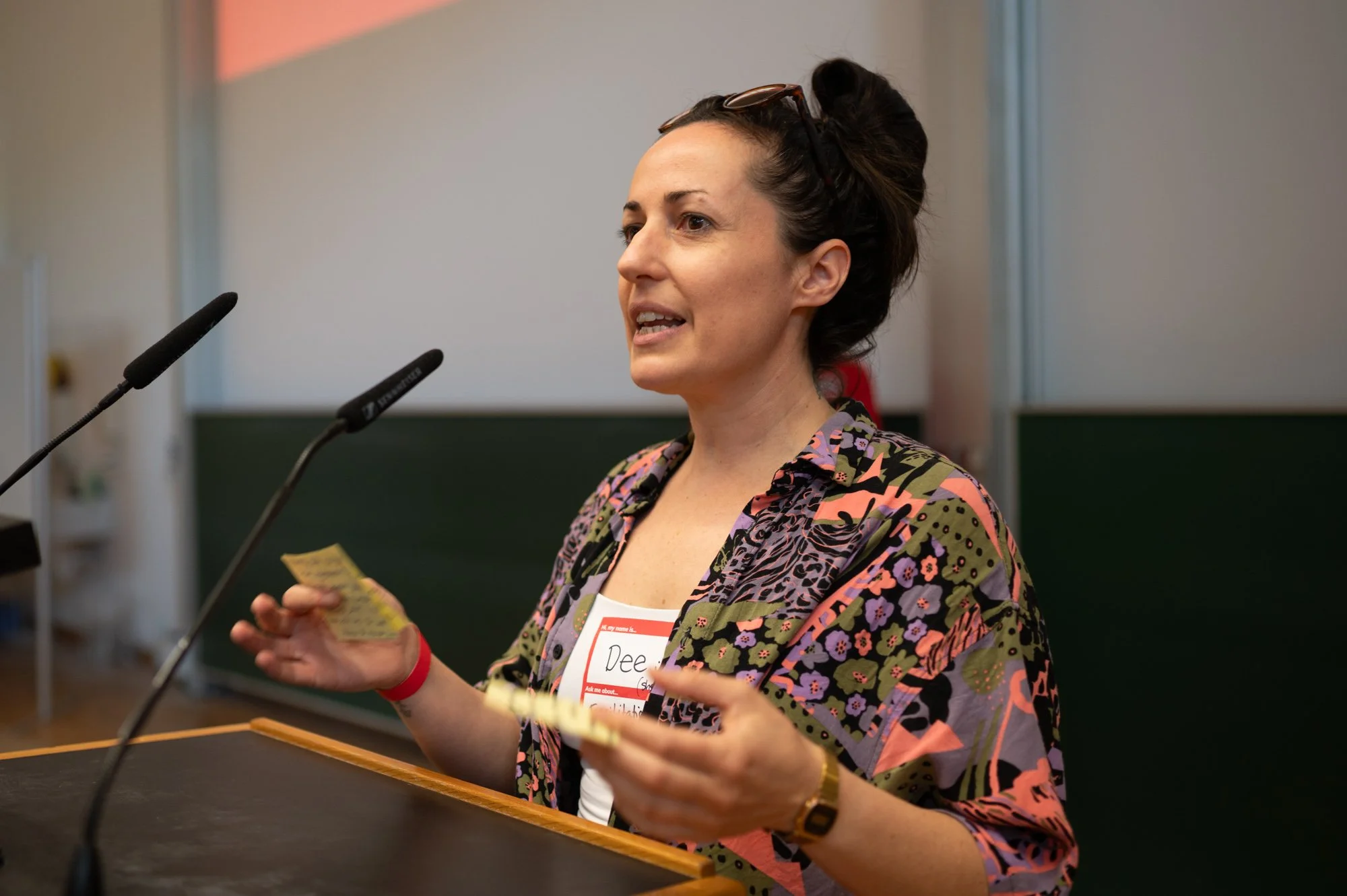
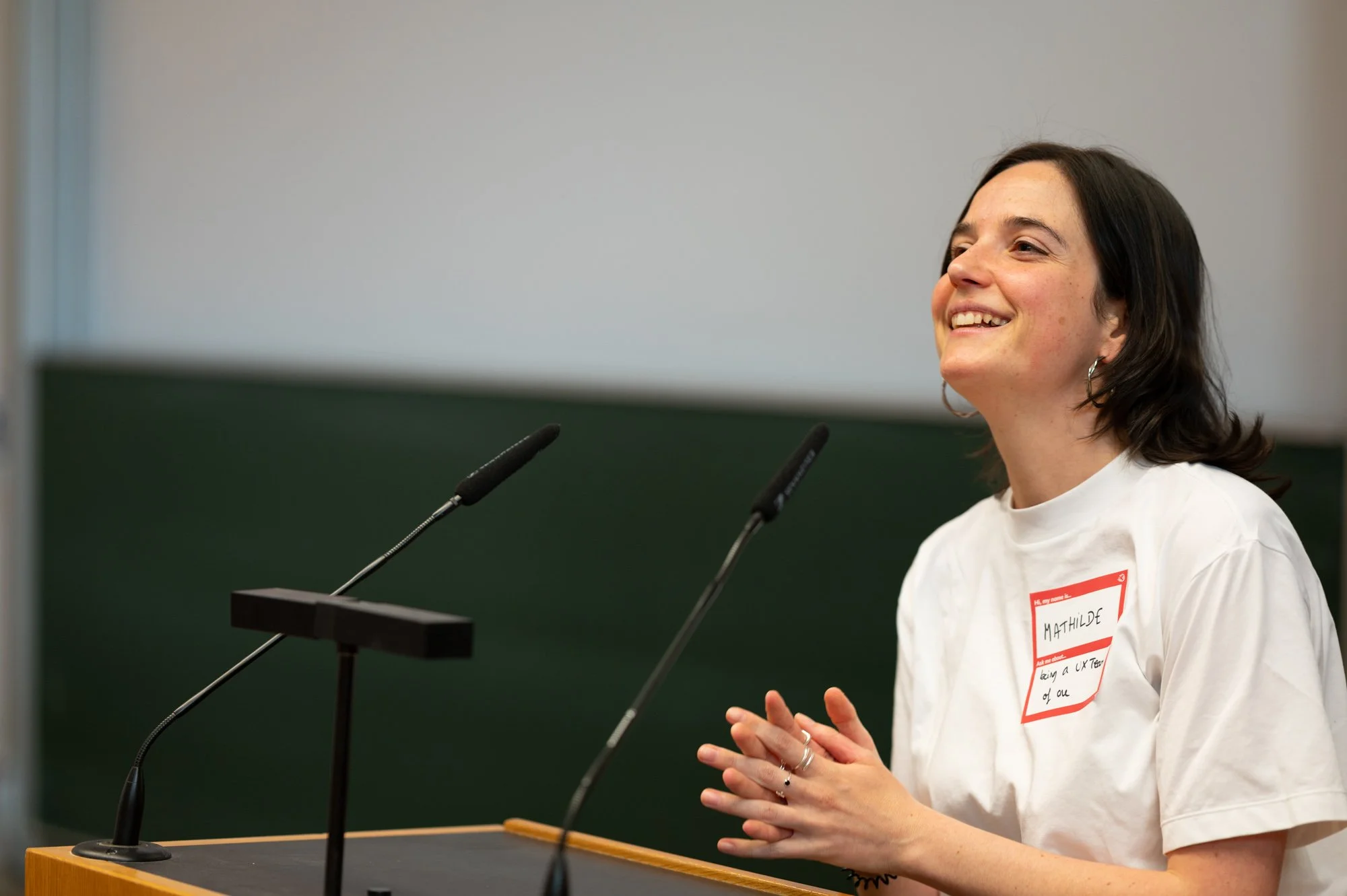
Sessions about ADHD, neurodiversity and working in a way that fits your brain drew honest, personal conversations. One speaker tried an experiment: a friend pitched her sessions for her, to show that standing up and pitching is a real barrier for some people. The experiment made many of us think about how to make barcamps easier to join for everyone. Other sessions looked at design in the public sector, accessibility, and designing for people who need more than a standard solution.
5. Working in teams of all sizes
Big companies shared how they manage design at scale and how they adopt AI across teams. At the same time, the “UX team of one” session was added to the board on Sunday morning. It showed that many people work alone in their company, and that they need a space to meet. Other sessions covered using psychology to ask better questions, and a new typeface designed for the German railway.
A Heartfelt Thank You to Our Sponsors
Thank you to Humboldt-Universität zu Berlin for hosting us again. Keeping a free community event alive is not easy in tough times, and we are grateful to everyone who made it possible: our sponsors, partners, the volunteers, and the organizing team. Most of all, thank you to everyone who came, whether you pitched a session, asked a hard question, or simply showed up with an open mind.
Mark your calendars: UXcamp Europe 2027 will take place on May 15–16, 2027. Until then, keep asking good questions, keep trying new things, and take time to rest.
Sponsors 2026
See you next time
